
Reading, Watching, Listening
Some recent extracurriculars

Its been a while since I’ve done one of these! It’s been a busy two and a half months of reading and researching and writing, with this last activity divided between working on the sabbatical novel and writing essays for this space. I’ve been noodling about with a post on the novel itself—specifically, the exercise of writing a fictionalized version of my maternal grandfather, the protagonist of the story—so you can look forward to seeing something like that appear here soonish.
I also REALLY need to get started on my course prep for the fall term. I’m teaching two courses, “Critical Introduction to Popular Culture,” a second-year course, and “Southern Gothic,” a third-year. Part of my winter sabbatical has been devoted to thinking through the problem of our brave new AI-saturated world and how to deal with that in the classroom—which really is the problem of constructing assignments that can’t simply be fed through ChatGPT and creating incentives for my students to, you know, actually do the reading.
Which, I’m sure, will be fodder for at least a few future posts. So too will be the course content: my writing here at The Magical Humanist tends to follow whatever is uppermost in my mind in a given moment; also, I’ve more or less managed to remain steady in my once-a-week posting when I’m also teaching by writing stuff directly lifted from my course readings and lectures (case in point: the Poem of the Week, which had a brief but prolific run during last year’s fall semester). Which is by way of saying that you can look forward to an increasing number of essays on topics related to pop culture and the southern gothic (and I would not be surprised to see some overlap) as the year goes on.
But that’s to come! For now, a recap of my reading, watching, and listening …
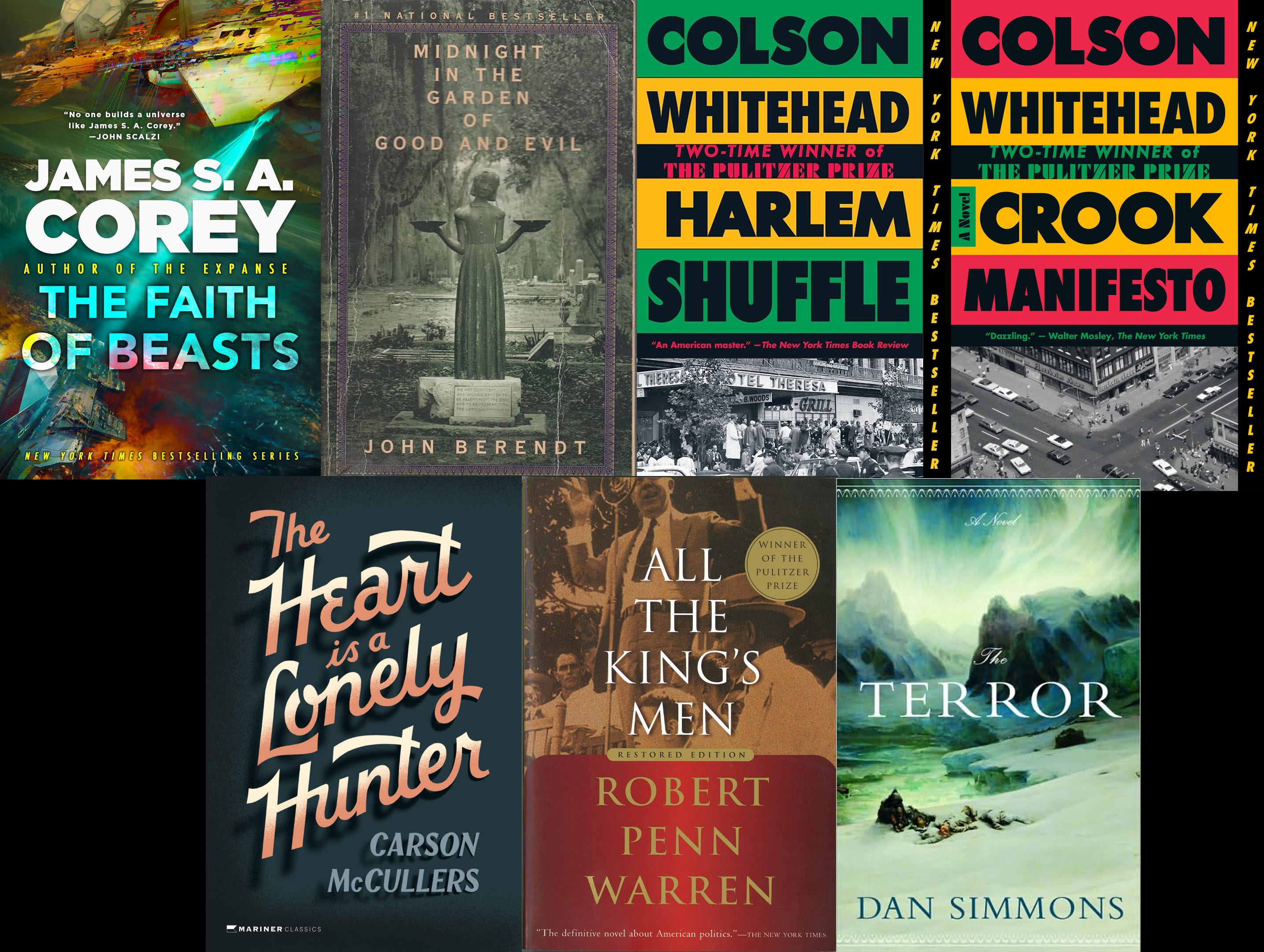
Currently Reading: Dan Simmons, The Terror (2007). Dan Simmons has the distinction of writing a novel that is deservedly a bona fide SF classic, Hyperion (1989). I’ve read a handful of his other novels, all of which I’ve enjoyed; the first few times I saw The Terror on the shelf at the bookstore—notably, in the horror section, not SF—I was intrigued by its description as the story of the doomed Franklin Expedition, in which Sir John Franklin took the ships Erebus and Terror in an ill-fated search for the North-West Passage through the arctic.1 In Simmons’s retelling, the cold and ice aren’t horror enough, for the crews of the ships are being hunted by some mysterious creature.2
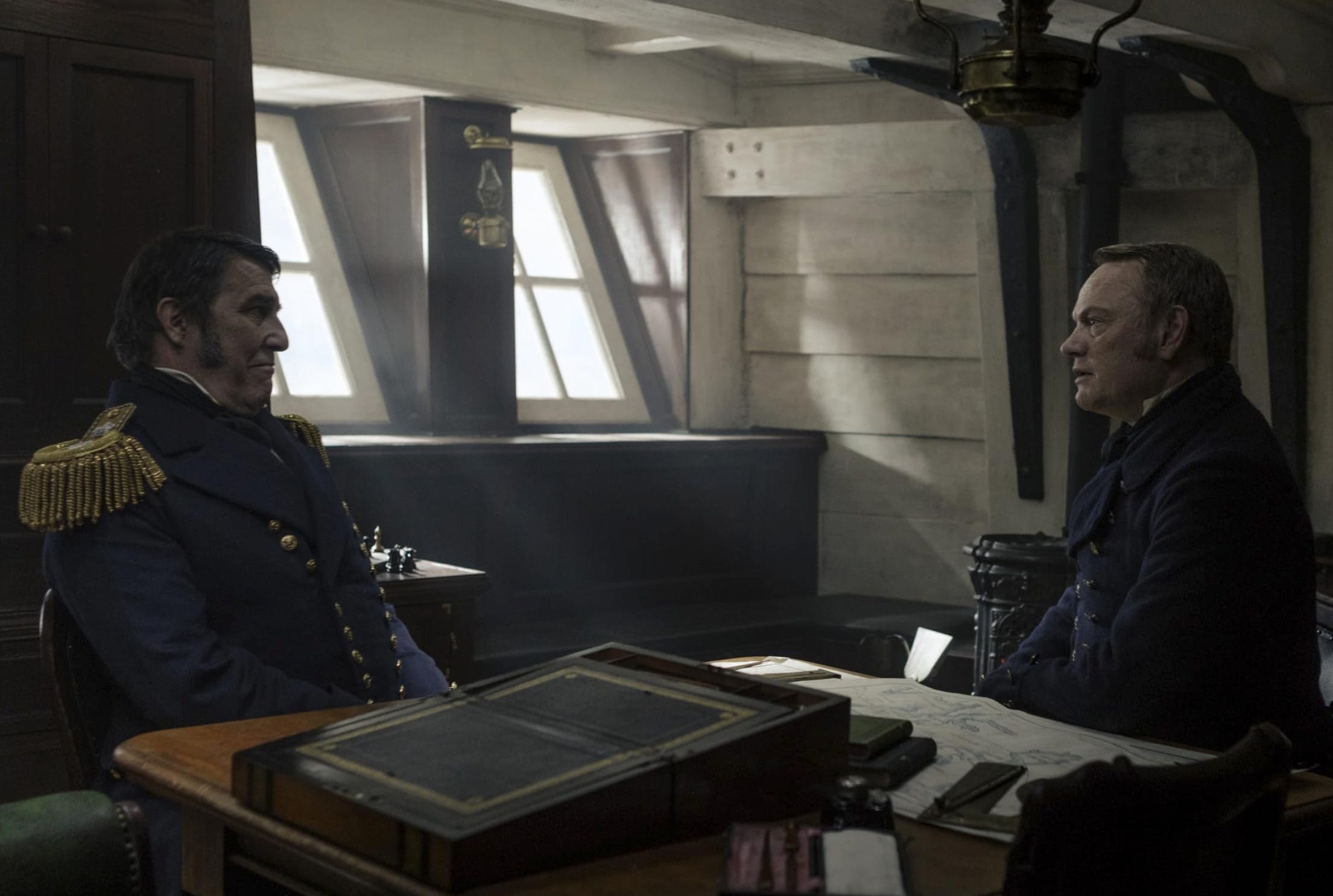
In spite of my regard for Simmons’s fiction, I never picked it up. Then I watched the AMC series The Terror, whose first season adapts the novel.3 I immediately binged it, both for my long interest in the novel and for the fact that it stars Ciarán Hinds as Sir John Franklin and Jared Harris as Francis Crozier, the captain of the Terror. Going then to pick up the novel I discovered it was no longer available. So when I saw it on the shelf recently, I immediately nabbed it.
And it’s good! It’s a very granular and (from what I can tell) historically accurate rendition of what an arctic expedition of its sort was like … which has the effect, among other things, of making me wonder why on earth anybody would subject themselves to that torture. I’m about a quarter of the way in and I’m really enjoying it.
Previous reading
James S.A. Corey, The Faith of Beasts (2026). Corey is the pseudonym for the writing duo of Daniel Abraham and Ty Franck, who gifted the world the magisterial nine-novel series The Expanse—a compulsively readable and blisteringly smart opus that spawned one of the best SF television series ever made.4 The Faith of Beasts is the second novel in their new three-book series. In The Mercy of Gods (2024), a human-occupied planet that is not Earth is attacked by the Carryx, a massively advanced alien species solely bent on galactic conquest. Their only consideration for the other species they conquer is: Can they be useful to the Carryx? If yes, they can live as subject peoples. If not, they are simply exterminated. A handful of humans are brought to the Carryx home world with the one task of proving their usefulness in order to spare all humanity.
The Faith of Beasts continues the story in a variety of satisfying ways. The first novel engaged in a lot of setup and left a lot of questions unanswered—one of the big ones being, how did humans get to this planet that isn’t Earth? Does Earth still have people? I’m curious how book three will resolve everything but will definitely be reading the hell out of it when it’s released.
John Berendt, Midnight in the Garden of Good and Evil (1994). I watched the film adaptation of this a long time ago, and it was just OK. The book itself I picked up as part of my preparation for my upcoming course on southern gothic, and I was pleasantly surprised by how good it is. Technically it’s a true crime nonfiction about the several trials of millionaire antiques dealer Jim Williams, who is ultimately convicted for the murder of his young lover Danny Hansford. Technically that’s what it’s about, but really it’s about the city of Savannah, Georgia, and its colourful cast of characters whom John Berendt encounters while living there for the several years it takes to cover the trials. It takes a while to start really cooking, but when you’re about a third of the way in it’s hard to put down. The narrative, such as it is, is slow and meandering as befits a sultry southern climate.
Colson Whitehead, Harlem Shuffle and Crook Manifesto (2021 & 2023). I’ve written about Colson Whitehead here before, specifically his short and devastating novel The Nickel Boys (2019). These two more recent works are somewhat more upbeat, even rollicking at times. Ray Carney is the owner of a furniture dealership in Harlem in the 1960s. His deceased father was a notorious crook, a sort of jack of all trades of crime. Though Ray made a point of growing up on the straight and narrow, it’s more or less impossible to be a business owner in New York City without brushing up against the shady side of the street—cops need to be paid off, local gangsters need their taste, and as someone who initially dealt in both new and used furniture, there was never any shortage of stock that had fallen of the back of a truck, sold to him by local hoods. As the years pass and he becomes more prosperous and established, so too does he become a more accomplished fence.
These novels are the first two of a trilogy; the third, Cool Machine, is set to be released July 21. I cannot wait. I loved these novels, whose two main characters are Ray and Harlem itself. Whitehead’s written, among other things, a love letter to a specific urban space as it changes over time. Harlem Shuffle takes place in the 1960s, Crook Manifesto in the 70s, and Cool Machine will be in the 80s. Each is essentially three novellas, spaced a few years apart over their respective decades. In a perfect world they’ll be adapted by HBO: six-episode seasons, two episodes per chapter, ideally with David Simon (The Wire, Treme) in the executive producer role and a Black auteur like Ryan Coogler or Barry Jenkins as showrunner.
Robert Penn Warren, All the King’s Men (1946). Another book read in the name of fleshing out my background reading for teaching southern gothic in the fall.5 As I read it, I thought: this is a good candidate for the always-ongoing Substack literature debates over “difficult” books and, to a lesser extent, the parallel argument over “classics” (to wit: to read or not to read). To be clear, All the King’s Men is not difficult per se, but it is long (almost 700 pages), ponderous in parts, and unapologetically meandering. My general sense as I read it is that it shouldn’t be considered a difficult novel, but in the current climate probably would … and frankly as a candidate for being included in any non-graduate-level course, it’s a nonstarter.
ANYWAY. That’s neither here nor there. It’s a brilliant piece of writing, a fictionalized retelling of the corrupt and authoritarian political career of Huey Long, governor of Louisiana from 1928-1932, then elected senator in 1932. His prospective presidential run was cut short by an assassin’s bullet in 1935. Long is a cautionary tale for the present day: a populist who upended the establishment, but who in the name of pursuing what was in some ways a progressive agenda created the most autocratic political regime since Tammany Hall.6 Robert Penn Warren fictionalizes Long as Willie Talos7 and tells his story from the perspective of Jack Burden, a former journalist who becomes an aide to Talos. The narrative has at once an epic quality evocative of Melville, while also managing to communicate the claustrophobia of the big fish in a small pond that can often mark local politics. The prose ranges between the tersely observational and expansive and hallucinatory in a manner that can seem both homage and parody of Hemingway and Faulkner.8
Carson McCullers, The Heart is a Lonely Hunter (1940). Aaaaaand another novel read in preparing for teaching southern gothic. Unlike All the King’s Men, which was always already not an option because of its length, McCullers’s debut novel was a candidate for the reading list in part because it’s invariably included in any list of southern gothic classics. I started with high hopes, but it doesn’t make the cut. It has many of the key elements of the subgenre I’m looking for, but I found the story overall less than compelling. It’s a lovely character study, to be sure—each chapter works more or less as a short story, and the novel as a whole ambles interestingly along, with a shift in perspective each time, with the connective tissue being how each character interacts with all the others. Interesting, a pleasant read, but it faced stiff competition (Toni Morrison, Cormac McCarthy, Octavia Butler, among others).
Watching
Shrinking. I’ve mentioned this show a few times here, and over the past month and a half my wife and I watched all the extent episodes (up to the end of season three).
One of the show’s creators, Bill Lawrence, is also responsible for Ted Lasso—for which he hired Bret Goldstein as a writer and then as one of the stars—as well as the recent Steve Carell vehicle Rooster. He collaborated on Shrinking with Bret Goldstein again (who again also played a role on the show). This trio of shows has a particularly distinct flavour of optimism and uplift, which is consonant with the shift of sitcoms in the 2010s away from the sort of acerbic irony that marked the late 1990s and early aughts. Shows like Seinfeld embodied this earlier tendency, in part (I would argue) as a very specific critique of the sitcom as form—if Seinfeld was about “nothing,” that was a reflection of the vacuity of broadcast TV more broadly and sitcoms specifically. This ironic detachment had its apotheosis with Arrested Development, which depicted well-meaning characters like Michael Bluth (Jason Bateman) as delusional, whose self-importance made them oblivious, and everybody else as, variously, amoral, selfish, hurtful, or simply terrible.
While some shows like this persisted into the 2010s,9 we see a shift in this period. If acerbic irony was the keynote of the aughts, earnestness becomes the order of the day in the critical mass of sitcoms that follow. A good case in point is Community, which has all the hallmarks of a postmodern ironic self-reflexivity, but employs these qualities essentially as misdirection as it ends up being a show manifestly about, well, community. Similarly, we can actually see the shift from irony to earnestness occur over the lifespan of The Office, as it slowly sheds the British source code’s cruelty and warms to its characters. It’s notable that a co-creator of the American Office was Michael Schur, as he goes on to be responsible for what I would consider the signal earnest sitcoms that express a profound optimism about people: Parks and Recreation, Brooklyn Nine-Nine, The Good Place, and Rutherford Falls (this last being a series that really deserves more attention than it received). Other examples, not created by Schur: Schitt’s Creek, Abbott Elementary, Bob’s Burgers.
All of which is by way of saying that if Michael Schur’s shows comprise their own subgenre of earnest sitcom, Bill Lawrence is coming into his own in the same way. And that Shrinking is a hilarious and heartwarming show.
Movie Night! A little while ago my wife lamented the fact that we don’t tend to watch a lot of movies—either in the theatre or at home. So we decided that Saturday night will be movie night, in which we’ll select a film that at least one of us—but ideally both of us—hasn’t seen. We promptly broke that rule on the second Saturday when my wife, apropos of nothing, started jonesing to watch Zoolander (2001) again. So we did, and (1) it was even funnier now than when I watched it the first time, and (2) I was transported back to that time when, as an adjunct professor in the later stages of my PhD, all my students were given to saying something or other was “So hot right now!”
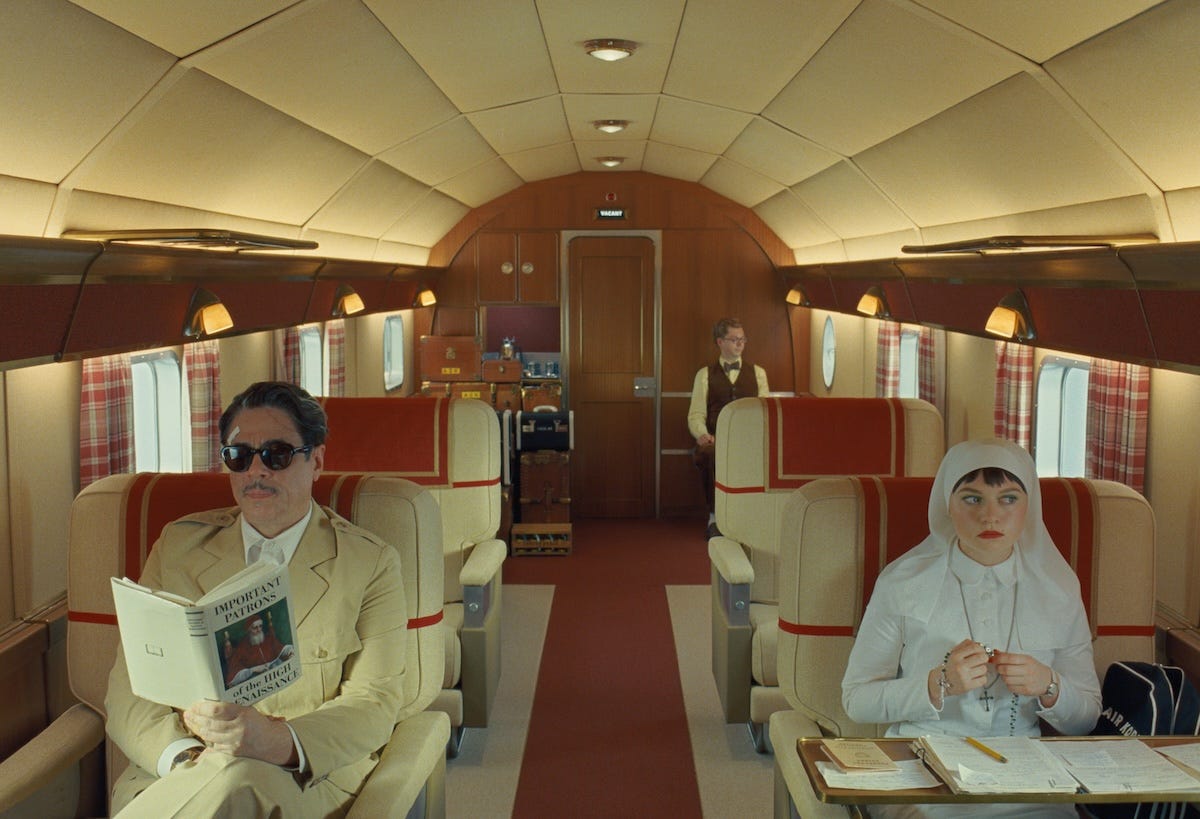
Otherwise, however, we’ve hewed to the basic rule. We’ve watched a fairly eclectic bunch of films: starting with 28 Years Later: The Bone Temple, which we missed when it was in theatres early this year; rather different in tone than last year’s 28 Years (which I wrote about here at some length), but we both really enjoyed it. It was far more focused on Ralph Fiennes’s eccentric Dr. Kelson, which can only make things better. Zoolander came next, and then we watched Parasite (2019), which is quite possibly one of the best films of the past decade. Then for a change of pace, a classic: Dial M For Murder (1954), which was one of the few Hitchcock films neither of us has seen. In trying to think of what to see next, it occurred to me that I hadn’t seen any of the recent films by Wes Anderson—the last one was The Grand Budapest Hotel (2014). So I suggested the most recent, The Phoenician Scheme (2025). And, well, Wes Anderson is reliably entertaining, even when he’d phoning it in (as some elements of this movie felt), and what’s more, nobody does a better job of creating a stylized visual world that at every moment reminds you you’re watching a movie (to the point where I had a brainwave to include The Phoenician Scheme on my pop culture course—more on that soon).
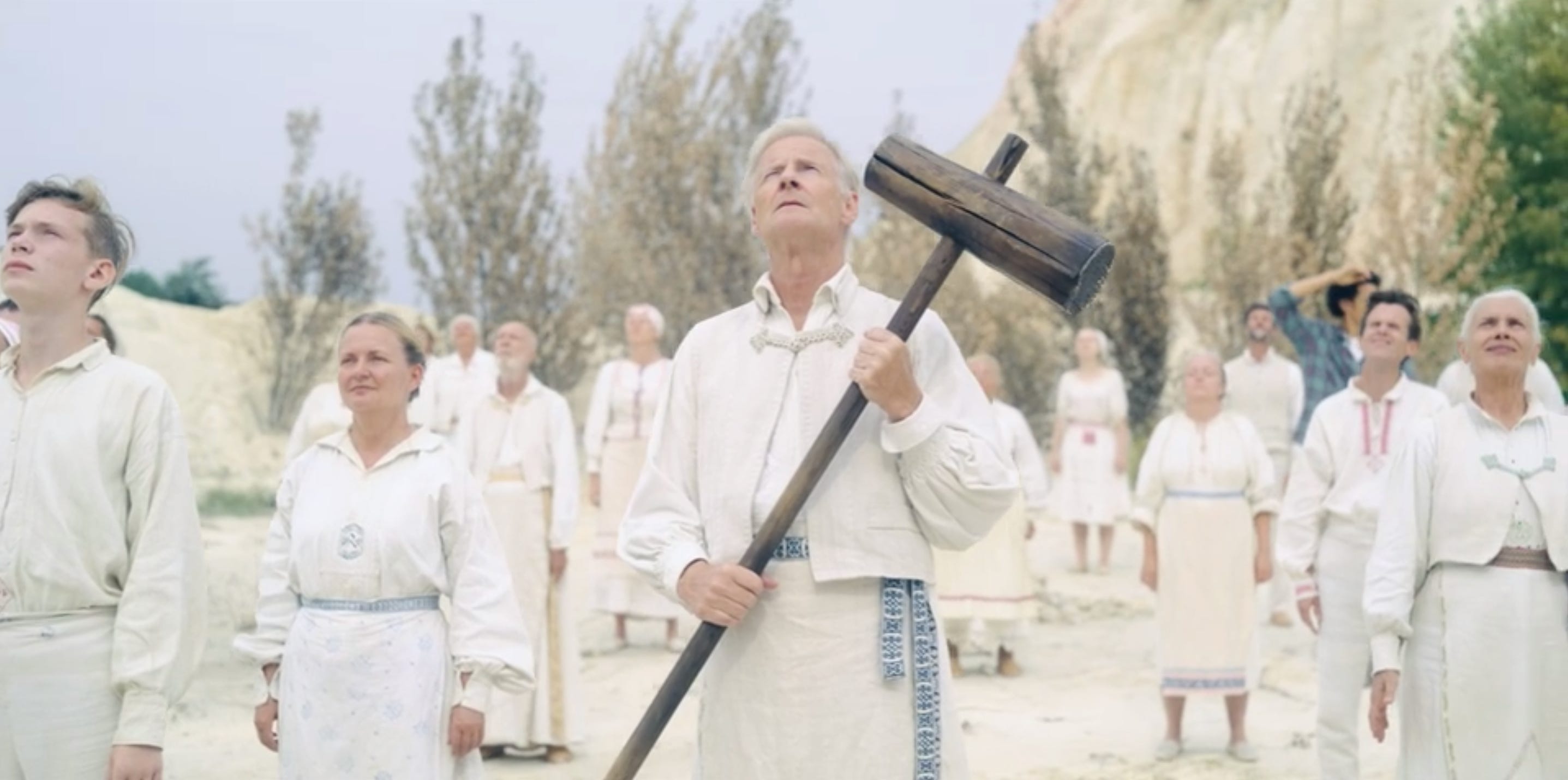
Last week, we watched one I’d seen but she hadn’t, a movie she was quite miffed to learn I’d watched without her—Ari Aster’s sophomore outing Midsommar (2019). As is my wont with horror and scary films, I watched it on my iPad while playing a computer game, and realized … well, not that scary. Disturbing? Fucked up? Yes and yes. And very much an instant classic of the folk horror subgenre, as well as Florence Pugh’s coming-out party for her enormous talent. Re-watching it with my full attention brought home just how artfully and beautifully made it was.
And finally, we most recently watched Project Hail Mary, which we’d also missed while it was in theatres. But it had recently become available to rent, and in the words of one of its main characters, we thought it was AMAZE AMAZE AMAZE. It was always in danger of becoming treacly, but always managed to back away from that precipice, not least because of Ryan Gosling’s charm. It was also very obviously from the same brain that gave us The Martian—an extended exercise in competence porn, which frankly is something I can’t get enough of in our present moment.
Listening
Audiobooks: I listened to Quinn Slobodian and Ben Tarnoff’s book Muskism: A Guide for the Perplexed, which is one of those audiobooks I felt compelled to immediately go buy in hard copy to have for future reference. It’s short and tightly written and does an excellent job of analysing not simply Elon Musk but how he has come to embody a particular ideology and way of thinking. Hence “Muskism”—not just the person, but what he’s wrought. It was, to be sure, an infuriating read at times; at points when I was listening to it at the gym, I worried that it might cause an aneurysm if it raised my blood pressure at a moment of a particularly heavy lift (I’m only partly joking). It is however worth the price of admission simply for the epilogue, in which the authors essentially write a Musk-inspired piece of “utopian” SF based entirely on things Musk has said or tweeted. It’s a chilling vision of the future, and one that eerily resembles the first chapter of the sort of classic dystopian novel that begins in a far-too-perfect antiseptic society.
I’m currently about halfway through Ben Rhodes’s All We Say: The Battle for American Identity. Rhodes was Barack Obama’s lead speechwriter for foreign policy, and in the last few years was also Deputy National Security Advisor. He is currently co-host of Crooked Media’s Pod Save the World, as well as being active in a variety of other political endeavours. I’ve read his two previous books, The World as it Is: A Memoir of the Obama White House (2018) and After the Fall: Being American in the World We Made (2021), both of which are thoughtful and extremely engaging and well written. Rhodes is one of the smarter people out there, with a wealth of experience from eight years in the Obama administration, and a humane and incisively honest voice. All We Say is, in part, an attempt to tell the story of America and American identity by way of fifteen landmark speeches—starting with Benjamin Franklin’s address to the Congressional Congress endorsing (with reservations) the new constitution, up to Obama’s 2015 speech at Selma and Trump’s 2017 inaugural address. Yes, Trump—Rhodes doesn’t just play the hits, he also includes speeches by people whose politics he abhors, but who played a significant role in shaping American self-fashioning. Indeed, his introduction focuses on J.D. Vance’s notorious 2025 speech to the Claremont Institute, in which he argues against the notion of America as a “credal” nation.
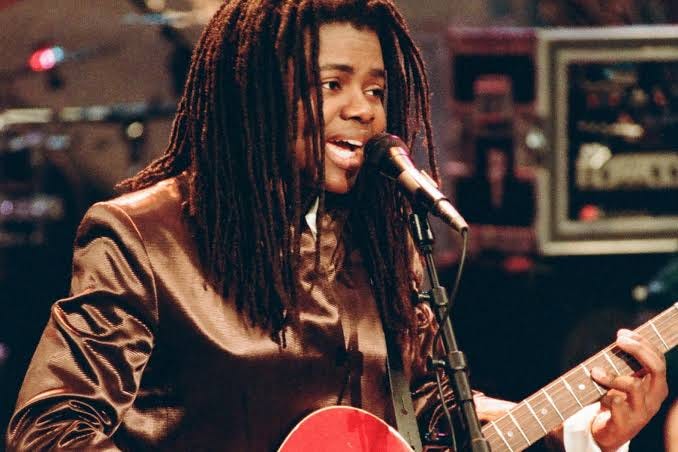
Music: Lately I’ve been revisiting Tracy Chapman a lot while I’m writing. There is little in her songbook that isn’t superior, that isn’t the kind of thing your average singer-songwriter wouldn’t give a limb to have written. She is something approaching an antidote to the present moment: a soulful, poetic, humane voice that throbs with both pathos and hope. Though it’s hard to choose a favourite, the song I find myself listening to most frequently is “Change.” It’s simple in construction, but devastating in implication: a series of rhetorical questions that posit revelations, followed by a simple question: “Would you change?” The refrain then challenges you to consider what would inspire change in your heart:
How bad, how good does it need to get?
How many losses? How much regret?
What chain reaction would cause an effect?
Other Stuff: Painting! New Couch! New Shelves!
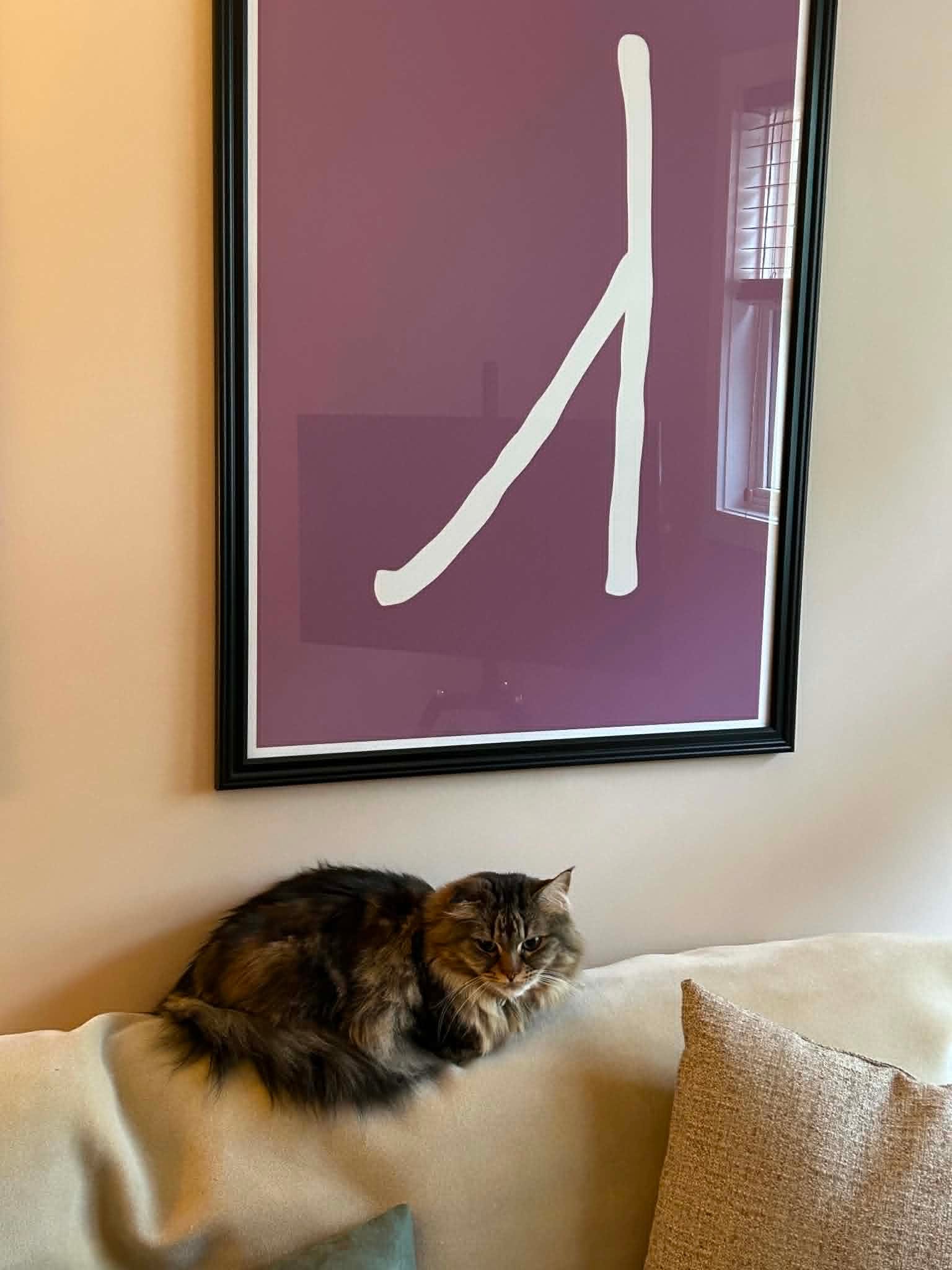
Though sometimes it’s difficult here in Newfoundland to discern, summer is upon us, which means we’re getting busy with house projects—gardening, landscaping, spring cleaning. We repainted our living room and dining room area in anticipation of a new couch. My wife wracked her brain to figure out what sort of art to hang over it, and had the rather brilliant epiphany of making two large prints of Elven runes of our first names’ initials. I think it looks lovely:

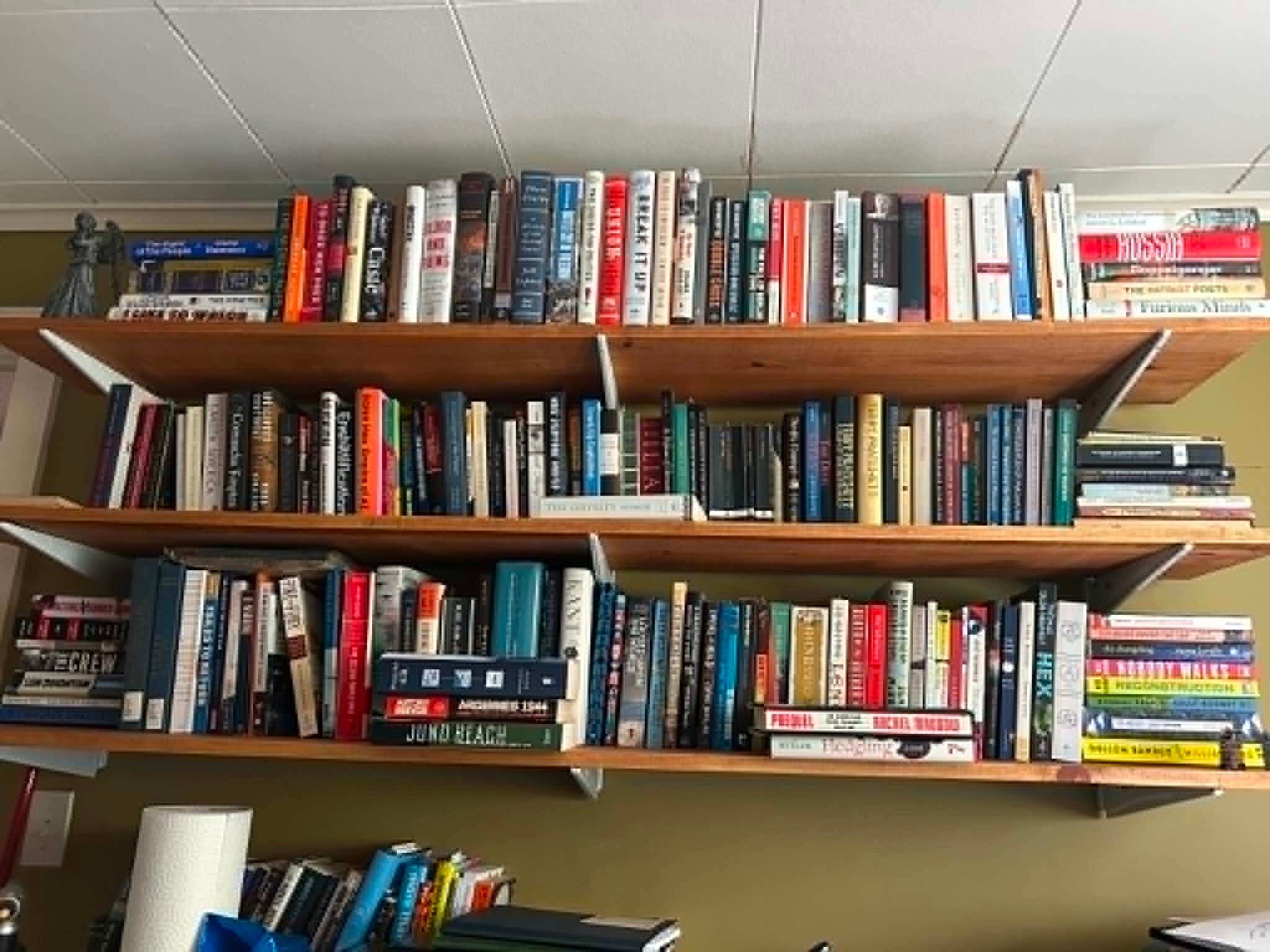
As part of my personal project of finally organizing my library both at home and work, I installed two new sets of shelves, both of which filled quite rapidly. These ones hang on the wall to my left when I’m sitting at my desk, and loom rather comfortingly over me as I write.
That’s it for now. Here’s your cat of the week: Catesby making herself comfortable on the new couch under my wife’s S-rune.
NOTES
We know the ships became trapped in the ice for two years and were finally abandoned by their crews, who presumably succumbed to the elements and starvation in a desperate trek southward. The locations of the ships were a mystery until fairly recently. In 2014 the wreck of Erebus was discovered; two years later Terror was found. Both have been made national historical sites by Parks Canada.
I had a little brainwave when I first read that part of the description, thinking “Oh, wouldn’t it be cool if the ‘mysterious creature’ was Frankenstein’s monster, gone feral from years of living in the Arctic?” The timing, I realized, was a bit off—Frankenstein was published in 1818, and the Franklin Expedition departed England in 1845—but not untenable. I nurtured a hope that this was Simmons’s gambit, but it wasn’t the case (I won’t spoil what the monster is). Now I keep thinking that would make a great novel, but it would suffer, perhaps fatally, from being overly similar to The Terror’s principal conceit.
Now in its third season, The Terror has become an anthology series, with a different horror scenario each time. Season Two was set in a Japanese internment camp in WWII and features the folkloric bakemono, a sort of vengeful ghost. After a several-year hiatus, the series returned with its third season adapting Victor LaValle’s novel The Devil in Silver (2012). Frustratingly, the series isn’t available on any of my current streaming services; having written about and taught Victor LaValle’s fiction, I’d love to see the current season.
Seriously. Fight me. This is a hill I’ll totally die on.
Gods help me, but Gone With the Wind is also in the queue.
A really good capsule history of Long’s reign comprises the first few chapters of Rachel Maddow’s book Prequel: An American Fight Against Fascism (2023), in which she breaks down the mechanics of Long’s authoritarian governorship with admirable narrative economy and draws attention to how, though Long was essentially a populist leftist (on all matters except race), his strongmen tactics excited the imaginations of a handful of people who’d become players in America’s fascistic ultra-Right.
Originally Willie Stark. The edition I read is Norman Polk’s 2003 restoration of the original draft, correcting edits made by the publisher to make the novel more palatable for readers.
Indeed, I encountered one passage that actually made me laugh out loud in the way it perfectly melds both Faulkner and Hemingway:
There is nothing more alone than being in a car at night in the rain. And I was glad of it. Between one point on the map and another point on the map, there was the being alone in a car in the rain. They say you are not you except in terms of relation to other people. If there weren’t any other people there wouldn’t be any you because what you do which is what you are, only has meaning in relation to other people. That is a very comforting thought when you are in your car in the rain at night alone, for then you aren’t you, and not being you or anything, you can really lie back and get some rest. It is a vacation from being you. There is only the flow of the motor under your foot spinning that frail thread of sound out of its metal gut like a spider, that filament, that nexus, which isn’t really there, between the you which you have just left in one place and the you which you will be when you get to the other place.
By the end of this passage I couldn’t help but think of Darl’s internal monologue about emptying yourself for sleep while listening to rain on a barn from As I Lay Dying (1930). More accurately, I suppose you could say it starts in a Hemingway place and then goes full-on Faulkner by the end. Throughout the novel there are a lot of pithy Hemingway-esque descriptions that are really more blunt statements (“This X is Y”), usually when describing a person’s character. But then there are also a lot of lengthier, more abstract and indeed lyrical stream-of-consciousness interiority.
Exhibit A being It’s Always Sunny in Philadelphia, but also such animated fare as Rick and Morty and Archer—the latter of which features the persistence of Arrested Development in Jessica Walter’s performance of Lucille Bluth by other means as Mallory Archer.