
Reading, Watching, Listening
A new extracurriculars feature

With January in the books, I’m now one month into my half-sabbatical. It’s been a relatively productive time—I’ve been hitting my 500 words a day goal for the novel project, and I’m quite enjoying the process of getting deeper into that story and its main character’s life; I haven’t shirked The Magical Humanist, managing five posts in January and one in February so far (two counting this one); and I’ve been reading quite a lot, more or less evenly divided between novel research material and pleasure reading. I’m still spending too much time scrolling the news, but I’m doing my best to curtail that particular soul-destroying time-suck.
One of my current intellectual heroes is John Ganz, who writes the most excellent Unpopular Front here on Substack, and is the author of When the Clock Broke1 (2024), an amazing book that basically follows the threads of Trump and Trumpism back to the late 1980s and early 1990s and makes the compelling argument that much of our current political clusterfuck has its origins in the then-fringe paleoconservative movement and such parallel red flags as Ross Perot’s populism. Anyway, if you like deeply intelligent and insightful political and philosophical analysis, his site is a must-subscribe. But I’m citing him here because he has a mostly-weekly feature called “Reading, Watching,” which I’m going to emulate/steal starting now. Though this will be more of a monthly feature.
January Reading
One of my sabbatical goals is to start working my way through the stack of unread novels I have—and also the stack of unread nonfiction—before I buy myself new books. I failed this pretty much immediately, as the Ian McEwan, Camilla Grudova, and Wright Thompson are all new purchases. But I did get through three novels from the unread stack, so, y’know, batting .500 there.
Ian McEwan, What We Can Know (2025). I’m always game to read a novel by Ian McEwan, but I usually wait for the paperback. This time, however, when I heard he’d written a post-apocalyptic story about scholars in a future England researching a poem from our present moment, I did not hesitate to grab it. McEwan’s future, set a century from now, is eminently plausible, and interesting in the way it doesn’t go full-on dystopia. There is still functioning society, there are still universities, there is still something resembling the internet, but the excesses of our present time are gone forever. His narrator is a literature scholar specializing in the period from 1990-2030—a field, we learn, that is largely disdained by fellow academics who study either earlier periods, or those that come after the mid-21st century catastrophe, because they see our epoch as comprised of people whose ignorance, apathy, and willingness to tolerate the world’s slide into reactionary politics are responsible for the catastrophe that unfolded.
What We Can Know is ultimately about precisely what its title suggests. At first, the principal theme seems to be the sheer proliferation of material our extremely online lives generate—with access, posthumously, to his subjects’ emails and texts and various other metadata in addition to their journals and other more conventional documents, the narrator is able to construct a granular narrative of the events with which he’s concerned. What is missing is the text of a poem at the center of it all, believed by most to be lost to history. But then the final quarter of the novel turns everything on its head and shows us that perhaps “what we can know” isn’t as thorough as we might imagine.
Chester Himes, A Rage in Harlem (1957). Sometimes when I’m on campus I like to trek over to the bookstore and peruse the shelves of my colleagues’ courses. This is a habit I picked up as a student, when I’d look over all the shelves of courses I wasn’t taking, feeling at once jealous of the students in those classes alongside the existential vertigo that comes from the feeling that there’s simply too much out there to read and I’d never get to it all. Later in life, that’s no longer a source of angst, though I do sometimes wish I could take some of the courses represented by the books on the shelves. One of my colleagues regularly teaches a course on hard-boiled fiction, which makes me (a) jealous that he staked out that territory before it occurred to me to do so, and (b) always curious to see which books are in rotation. Most recently, I picked up A Rage in Harlem, a novel of African-American noir that I’d heard of but never read.
It’s a very fun read; it tells the story of a hopelessly naïve young Black man named Jackson, in love with a woman who everybody but him can see is totally playing him and who loses all his money in a get-rich scam that leaves him in a bad place. The story becomes one of those long nights of misadventures as Jackson desperately tries different ways to recoup his losses and manages to make things successively worse with each attempt. Along the way he encounters a rogues gallery of characters populating Harlem’s nightlife, some of whom will recur in future Himes novels—most notably his hard-bitten detectives Coffin Ed Johnson and his partner Gravedigger Jones, who have a small role in A Rage in Harlem, but will headline later instalments.
Fun fact: Chester Himes was living in Paris when he penned A Rage in Harlem, originally writing it in French under the title La reine des pommes (“The Queen of Fools”). Having decamped America for France years earlier, following in the footsteps of such Black authors as James Baldwin, he basically wrote Harlem from memory.
Waubgeshig Rice, Moon of the Turning Leaves (2023). A few years ago, I taught a course on utopian and dystopian fiction. Looking to cast my net a little wider than the standard fare, I included Waubgeshig Rice’s novel Moon of the Crusted Snow (2018). It’s a story set on an Anishinaabe reserve in Northern Ontario; when news of large-scale civilizational collapse reaches the reserve, its people have to figure out how to survive when all of their basic supplies that come from the south disappear. Its protagonist, Evan Whitesky, is someone who has always tried to preserve and practice traditional Anishinaabe ways, which becomes ever more necessary as winter encroaches. Unfortunately, the larger proportion of people living on the reserve, after generations of learned helplessness by turns cultivated and enforced by Canadian governments, have lost what Evan struggles to retain.
If my students’ reaction to the novel was any indication, it was a good selection for the course. Not long after that I saw that Rice had written a sequel. Turning Leaves takes place twelve years later; Evan and his fellow survivors have left the reserve and found a new home where they live—both by choice and necessity—in traditional Anishinaabe ways. But when their new home threatens to no longer provide sustenance—the lake is getting fished out, and wild game are giving the place a wider berth—it is decided to send a party south to seek out likely new places to live, make contact with other survivors, and possibly discover the truth of what ended civilization over a decade earlier. Evan leads the party, which includes his now teenage daughter, on a harrowing trek of discovery. In some ways I found Turning Leaves a superior novel to Crusted Snow—more assured in the telling, more cohesive a narrative, and more fleshed out in its world building. It would be tempting to teach both novels in a future iteration of the utopias/dystopias course.
Susanne Clarke, Piranesi (2020). I read Susanne Clarke’s spectacularly epic debut novel Jonathan Strange and Mr. Norrell (2004), a sprawling alternative history of Regency England in which magic exists, years ago. If that novel felt like it was basically tailored for my tastes, Piranesi manages the same feat at about one-quarter the page length. It’s one of those books where, somewhere about the halfway mark, I find myself scheming about how to include it on future courses.2 If Strange & Norrell pushes my alternate history button, Piranesi hits me right in the labyrinths. Readers of The Magical Humanist may recall an essay I wrote last summer about Sir Terry’s conception of L-Space in the Discworld novels, in which I did a deep dive into the motif of the labyrinth through history.
Piranesi is a novel set in a labyrinth—a vast byzantine space of connected halls, atria, and vestibules of classical architecture, in which the upper floors are open to the sky and the lower floors are invaded by the sea. The narrator, the titular Piranesi (though he has a nagging suspicion that’s not his actual name) wanders these halls and records his days in his journal. He encounters a few other souls, most frequently a nattily-dressed man he simply calls The Other, but as the story goes on a few more people appear.
That’s really all I can say about it without venturing into spoiler territory, and I really don’t want to spoil it for anybody interested in reading it.
Currently Reading
Camilla Grudova, The Doll’s Alphabet (2017). A good friend of mine texted me to ask if I was familiar with this short story collection. I texted back: no. He then said that I should give it a look, as it was weird fiction that was right up my alley. Weird fiction I hadn’t read? Sold! And despite my pledge to only read already-purchased novels (which I’d already broken with What We Can Know), I ordered it.
I got about two-thirds through when the next book on this list arrived; I’ll return to it when I’m finished with that, but I’m quite enjoying it. Though I should note, it’s not by my lights Weird fiction in the sense of being Lovecraftian cosmic horror; it’s just bloody weird. In a good way! Grudova’s stories aren’t (so far as I’ve gleaned) narratively linked, but they’re certainly thematically linked, with old fashioned sewing machines comprising a creepy motif whose significance I haven’t yet deciphered. They remind me on one hand of Angela Carter’s weirder fiction, but also a sort of David Lynch style surrealism. Also something I’m now scheming about working into future courses.
Wright Thompson, The Barn: The Secret History of a Murder in Mississippi (2025). I’m only about one hundred pages in, so I won’t say too much about this book, other than to say it already has me pinned. I’ve been wanting to read this since I first heard about it. It’s a history of the lynching of Emmett Till in 1955 in Mississippi, a topic I have frequently addressed in my class whenever I teach Gwendolyn Brooks’s poem “A Bronzeville Mother.”3 It’s a harrowing and brutal murder, made all the more unthinkable because Emmett was just fourteen years old.
Thompson is a writer and journalist from Mississippi; in fact, he was born and grew up in the immediate vicinity of where Emmett Till was abducted and murdered. The barn of the book’s title refers to the barn in which Till was tortured and killed before being thrown in the river. Thompson’s book is about Till’s murder, but it is also about that particular part of the world and the way in which that very region of Mississippi is at once stained by and complicit in the systemic racism that allowed such an atrocity to occur. At particular issue for Thompson is the silence that has long been enforced around the killing, and the slow and painful processes of unearthing the long-elided truths about it.
I’ll have more to say when I’m finished the book, and when I finally write the promised essay on Brooks’s poem.
Watching
In January, my wife activated one month of free AppleTV, which we used to plough through Pluribus, the most recent season of Slow Horses, and The Studio. I wrote about Pluribus at some length here; it was easily one of the best shows I’ve seen in recent memory. Slow Horses continues to be one of my favourites, with Gary Oldman as the crapulescent old spy Jackson Lamb worth the price of admission even if the rest of the show was terrible (which it’s not—the cast is amazing up and down the ensemble, with Kristin Scott Thomas as Lamb’s frenemy a particular highlight).
We were also excited to watch Down Cemetery Road, based on an earlier series of mystery novels by Slow Horses author Mick Herron. Starring Emma Thompson and Ruth Wilson, it looked like something tailor made for us. And yet … wow, it is bad. We made it about one and one-fifth of an episode into it before giving up. Thompson and Wilson and the rest of the cast were giving it their best, but the writing is just bafflingly, execrably terrible. There really should be a nasty punishment for misusing Emma Thompson like this. Maybe she can make a lateral move to Slow Horses in future seasons …
On the other hand, The Studio was a delightful revelation. I was ambivalent about it because I’m tepid on Seth Rogen—sometimes I find him funny, often not so much. But this series is simply hilarious and gets increasingly so as it progresses. It was also the last thing Catherine O’Hara did before her recent death, and she would have been the comic standout were it not for Bryan Cranston’s appearance as the entirely unhinged CEO of the studio’s parent company. In addition to the core cast, the series features appearances by a variety of actors and directors playing often exaggerated (I assume!) versions of themselves.
The two series we’re currently following on a weekly basis are:
The Pitt (season two). I wrote in my 2025 television roundup about how much we loved season one of The Pitt. My wife particularly loves it because, as a health care professional, it drives her reliably nuts every time hospitals and medical situations are depicted inaccurately (which is, apparently, all the time). The Pitt is one of those rare shows that gets it right. Season one was superlatively good; season two is carrying on with no noticeable diminution in quality. Dr. Robbie (Noah Wyle) is still the beating heart of the show, but he is surrounded by possibly the best television ensemble ever, especially the charge nurse Dana (Katherine LaNasa). It’s nice to see that last season’s hapless hayseed med student Whittaker (Gerran Howell) has found his feet and immeasurably more confidence this season as a resident; caustic Dr. Santos (Isa Briones) has smoothed out slightly while still keeping her edge; and our favourite Dr. King (Taylor Dearden) is still a charming fish-out-of-water, this season somewhat off kilter in anticipation of a deposition she has to give. And adding some useful tension to the drama is the new attending physician, Dr. Al-Hashimi (Sepideh Moafi) who is here to replace Robbie when he goes on sabbatical at the end of this shift.
I heard this show called competence porn recently, and I can’t think of a better way to describe its appeal: at a moment when everything seems ready to fly apart at the seams, the U.S. government is being run by a collection of corrupt hacks, and expertise of almost any sort is now suspect among a distressingly large number of people, there is enormous pleasure in watching something that celebrates hypercompetent people who are really, really good at what they do.
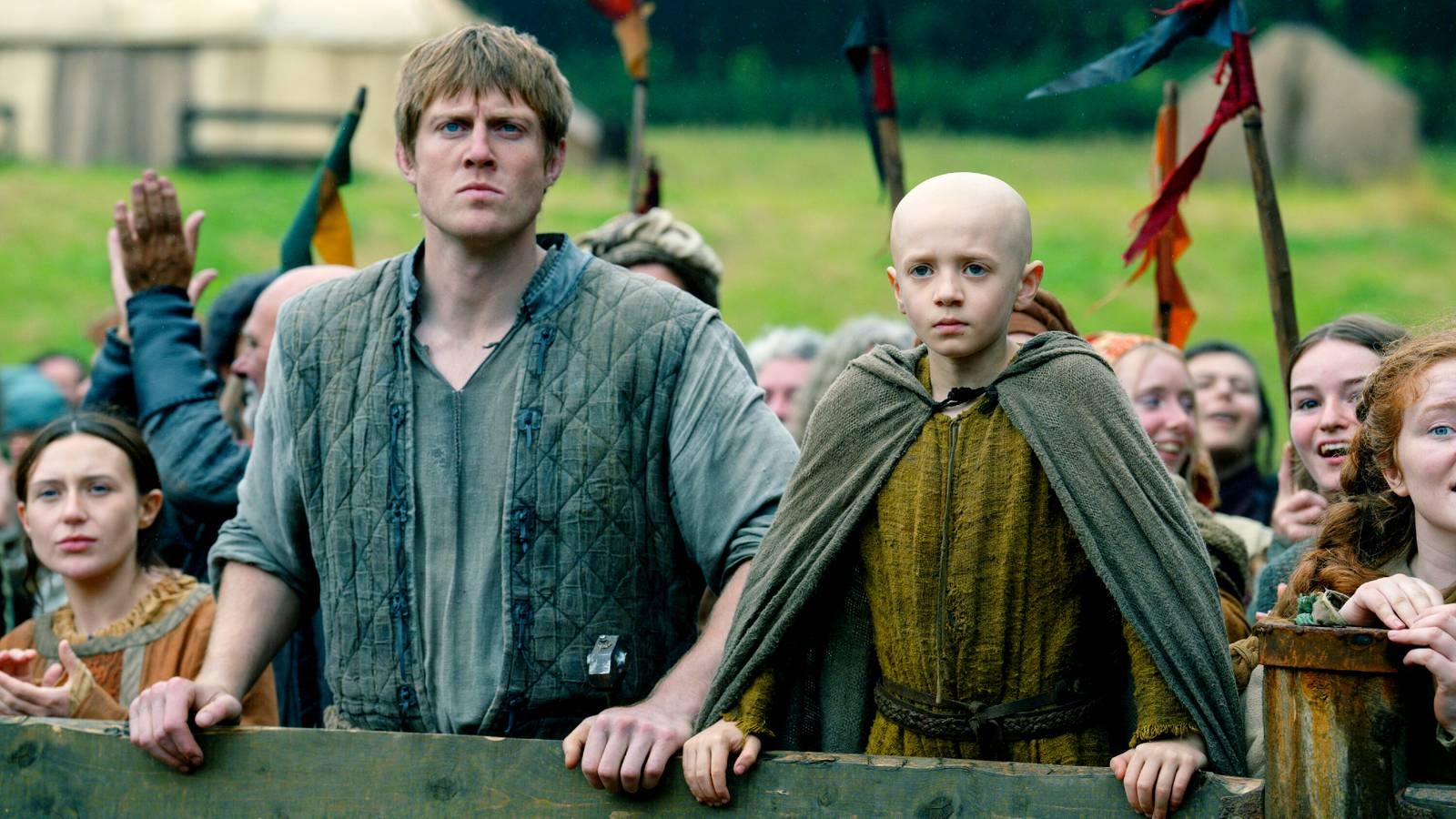
A Knight of the Seven Kingdoms. I read George R.R. Martin’s novella The Hedge Knight during the long wait between A Feast for Crows (2005) and A Dance With Dragons (2011), and it was like water in the desert. What I loved about the novella is what I love about this series: it’s a wonderfully observed character-based story set in the midst of Martin’s huge world, with relatively low stakes and refreshingly small preoccupations. Ser Duncan the Tall, aka “Dunk,” is a poor hedge knight with barely any coin and only his dead master’s sword, shield, and horses to his name. He meets the spear-bald precocious kid named Egg, whom he grudgingly allows to be his squire. Dunk is, fittingly, a lunk—but a deeply likeable lunk, a naïf who truly believes that knights are the lantern-bearers of honour and justice. Of course, if you’re watching or reading this, you’re most likely familiar with Westeros and the fact that GRRM’s knights are mostly highborn scoundrels and thugs, with a handful who manage to be decent people.
We’re three episodes in and loving it. Dunk (Peter Claffey) is endearingly thick; Egg (Dexter Sol Ansell) continues the Game of Thrones casting directors’ winning streak of selecting preternaturally gifted child actors; and the rest of the cast of characters is reliably charming, such as Lyonel “The Laughing Storm” Baratheon (Daniel Ings), unnervingly sharp, as with Prince Baelor “Breakspear” Targaryen (Bertie Carvel); and in the most recent episode we finally met our villain, the sociopathic Prince Aerion “Brightflame” Targaryen (Finn Bennett).
I will probably have more to say about this series when the season is done.
Listening—Audiobooks
I love audiobooks, but I tend to have a narrow range of books that I can listen to and absorb. I listen to audiobooks (and podcasts) when I’m driving, doing dishes or cooking, cleaning or engaged in some other household chore, and when I’m working out. Weirdly, I find fiction generally doesn’t work for me; for some reason, I have difficulty keeping things straight if my mind wanders and I miss a bit. Nonfiction is more my speed, though not if it’s too dense or complex. This has thus been my preferred medium for consuming books about contemporary politics, especially the many and varied books concerning the Trump years. It’s a bit masochistic, yes, but it has also provided a good understanding of our present moment in history. Which brings me to my current listen:
Jason Zengerle, Hated by All the Right People: Tucker Carlson and the Unraveling of the Conservative Mind (audiobook). Zengerle’s book on the rise and fall and rise again of Tucker Carlson certainly fits into the category of masochistic listening. It is however very entertaining: the book is well written and clips along nicely, and it does a great job of explicating just how someone as vile as Carlson rose to his current prominence. It also is quite fascinating in how it paints a picture of the younger Tucker: highlighting the elements of his character that charmed people and made unlikely friends, as well as those that have metastasized into white nationalist toxicity that embraced the Great Replacement Theory and played footsie with Nick Fuentes.
Listening—Music
As I outlined in my New Years resolutions post, one of the things I was determined to do in 2026 was break up with Spotify and rebuild a library of music I actually own. Granted, I’m rebuilding my library through iTunes, so in one sense I’ve exchanged on evil tech company for another. But in another sense, I get to keep the music, and the artists get slightly more money from the transaction.
But part of this exercise is choosing whole albums and making a point of listening to them as albums. The playlist-building that dominates the streaming experience makes for a piecemeal and fragmentary consumption. And while I still am buying individual songs here and there and building playlists (mostly for my cardio workouts), I’m also quite enjoying getting back to the experience of individual albums as an aesthetic whole.
So, three of my current listens:
John Lee Hooker, Don’t Turn Me From Your Door. I first heard this album when my father played it for me many years ago; I bought the CD for myself soon after. I recently added it to my virtual music library, and it has been in frequent rotation for the past week or so. It is a quintessential Blues album, and one I didn’t know how much I’d missed until I played the first few bars of “Stuttering Blues.”
Loreena McKennit, Book of Secrets, The Visit, The Mask and the Mirror. The great Canadian Celtic chanteuse is a singer and musician I’ve loved since my early 20s. Her album The Visit was a revelation to me when I first heard it. One of the greatest concerts I ever attended was when she played Massey Hall in Toronto in the mid-1990s. She sang accompanied by a band that looked more like an orchestra, who played every sort of obscure folk instrument you could imagine, from the lute to the hurdy-gurdy. The stage was lit with simulated candlelight, and when she walked out wearing a gorgeous medieval-esque dress, her great mane of red hair illuminated like a halo, I nearly died. This concert video for her song “The Highwayman” (the Alfred Noyes poem put to music) gives you a sense of what it was like:
The Levellers, Levelling the Land. Do you like angry Celtic-inflected political protest music? Look no further than the Levellers, and this album in particular. I saw them in concert about twenty years ago at Lee’s Palace in Toronto. Well, I saw some of them—three members of the band in a totally acoustic show. It would have been amazing, but I wasn’t feeling well, feeling vaguely sick from something that would manifest in a full-blown flu bug the next day. Sadly, I left early.
A Little Bit of SOTS (State of the ‘Stack)
So, it’s been a strange few days here at The Magical Humanist. Five days ago I posted a note on Substack mocking the usual suspects who are up in arms because Christopher Nolan has apparently cast Lupita Nyong’o as Helen of Troy. It’s the most viral I’ve ever been: as of this writing, I’ve got over 1600 likes, over 100 restacks, and almost 90 comments (not all of them in agreement with my sentiment). I suppose it’s … gratifying? It feels strange, but mostly it feels random. I’m mostly used to posting in relative obscurity on whatever platform I’m using. Most of my notes get one or two likes, maybe as many as five or six; my posts range from two hundred views to seven or eight hundred (usually when I post about Discworld) and get liked or commented on at about the same rate as my notes.
That’s about the level of fame I’m comfortable with. Considering the care and effort I put into my essays, I would have been far more elated for one of them to go viral; on the other hand, it has been gratifying to see my subscriptions go up (I’m at 280 now! Huzzah! And welcome to everybody who’s receiving this in your inbox for the first time). I’m also quite pleased that, mixed in with all the notifications of people liking or restacking the note, I’m also seeing people liking my older posts, so at least I’ve piqued some interest in the stuff I’m actually proud of.
All that being said, in the days before I leapt valiantly to defend the honour of Lupita Nyong’o I was noticing interesting traffic on my recent posts. For one thing, my post on Pluribus was doing quite well: as I said, the most popular stuff I publish tends to top out at around 800 views; that post handily broke 1K (currently sitting at 1.36K). Which, I figured, was probably a function of people’s interest in the show. But then I published an essay on W.H. Auden’s elegy for W.B. Yeats, and it also exceeded a thousand views.
See, that’s weird: my poetry posts tend to generate the least traffic, which is unsurprising. Sad, but unsurprising.4 So why is that one garnering so many eyeballs? I’m honestly somewhat baffled. But if I get an answer, I’ll certainly share it here.
And to conclude, here is our requisite cat: Bartleby, who has taken up residence here in my office’s reading chair, daring me to shoo him away.
Reader, I did not shoo.

NOTES
Full title: When the Clock Broke: Con Men, Conspiracists, and How America Cracked Up in the Early 1990s.
As luck would have it, next year I’m teaching a second-year course on Introduction to Science Fiction and Fantasy. Choosing texts for the fantasy side of that pairing can be difficult, given that fantasy novels have a great tendency to be quite voluminous. The selection of good fantasy novels that can fit, length-wise, into a thirteen-week course, is limited. Piranesi, at an economical 250 pages, is perfect.
Readers who have followed my Poem of the Week series will know I meant to end it with a discussion of Brooks’s poem; I ultimately punted on that, promising to make it one of my first poetry essays of 2026. When I ordered The Barn, I decided I would wait on Brooks until I’d read the book, in the interests of deepening and strengthening my thoughts.
Conversely, however, they’ve received the most approbation from people telling me in person how much they like them. Which is just a whole ‘nother kind of dopamine hit.
"Shoo, Bartleby".
"I would prefer not to."
Piranesi's amazing! I was unfamiliar with the artist it's named after, but I looked him up after reading it, and his pictures looked exactly like the book had made me imagine.
(Which is interesting, actually, given its intertextuality with The Magician's Nephew, another book where somehow I know what every scene looks like. I'd think I was remembering the film, except that none of the adapters ever got that far in the series.)